Elevate Your Property—Literally and Financially—with Retaining Walls
When it comes to enhancing a commercial property’s value and function, few investments offer the dual benefit of aesthetic appeal and practical support like retaining walls. These structures do more than prevent soil erosion—they transform sloped lots into usable, level spaces, define property lines, improve drainage, and can even boost the market value of the land. For commercial property owners, developers, and facility managers, retaining walls are not just a landscaping choice—they're a strategic asset.
Whether you manage an office park, retail center, apartment complex, or industrial property, investing in the right commercial retaining wall solution can literally elevate your land—and your bottom line.
What Is a Retaining Wall?
A retaining wall is a rigid structure designed to support soil laterally so it can be retained at different levels on the two sides. It prevents soil from sliding or eroding, especially in areas with steep slopes, elevation changes, or heavy water runoff. These walls are common in both residential and commercial developments, but in a commercial setting, they are often larger, engineered to higher standards, and subject to stricter regulatory requirements.
Retaining walls are typically made from concrete, stone, brick, timber, or modular blocks. Their function goes beyond holding back soil—they can also redirect water flow, increase usable space, and enhance the visual appeal of the property.
The Functional Value of Commercial Retaining Walls
1. Maximize Usable Property Land on Sloped Lots
Commercial developments often require large, flat surfaces for parking lots, buildings, and access roads. On hilly or uneven terrain, retaining walls are essential for carving out level areas. Without these structures, much of the land would remain unusable or prohibitively expensive to develop.
For example, a sloped lot that would only accommodate one building can be regraded with retaining walls to support multiple structures or larger parking areas. This directly increases the leasable square footage and improves the property's earning potential.
2. Prevent Erosion and Landslides
Soil erosion is a major concern for properties with slopes or high precipitation. Water runoff can wash away landscaping, undermine foundations, and create hazardous conditions. Retaining walls stabilize the land and prevent soil from moving downhill. In commercial environments, where foot traffic, vehicles, and equipment add pressure to the terrain, soil stabilization is essential.
A properly engineered retaining wall can protect walkways, driveways, outdoor patios, and other hardscape features from the costly damage of shifting land.
3. Improve Property Drainage and Reduce Flood Risk
Commercial retaining walls are often integrated with drainage solutions such as weep holes, drainage pipes, and gravel backfill. These features channel water safely away from structures and prevent pooling, which could otherwise lead to flooding or water damage.
This is especially crucial in urban commercial developments where impervious surfaces like asphalt and concrete prevent natural absorption of rainwater.
The Financial Return on Retaining Wall Investment
While retaining walls represent a significant upfront cost, commercial retaining walls offer long-term financial benefits that more than justify the investment.
1. Boost Property Value
By increasing usable square footage and improving the structural integrity of the site, retaining walls contribute directly to a property’s value. Buyers and tenants are more likely to invest in or lease land that is secure, well-designed, and efficiently utilized.
Commercial appraisers also factor in improvements such as retaining walls when determining market value, particularly when they enhance the functional layout or prevent known site risks like erosion or flooding.
2. Protect Existing Infrastructure
Erosion and uncontrolled water runoff can jeopardize parking lots, driveways, foundations, and landscaping—all of which are costly to repair. Retaining walls serve as a long-term protective measure that reduces maintenance and emergency repair costs. The ROI becomes especially apparent when you consider the potential losses from structural damage, tenant disruption, or liability claims due to unstable terrain.
3. Enhance Curb Appeal
Aesthetic appeal isn’t just for homes—it matters in commercial real estate, too. A clean, professionally constructed commercial retaining wall adds curb appeal by adding visual structure and modernizes a property. It signals that the property is well-maintained, professionally developed, and safe for clients, employees, and visitors. These features are especially important for retail centers, office parks, hotels, and apartment complexes where first impressions matter.
Common Types of Retaining Walls in Commercial Settings
Not all retaining walls are created equal. The right choice depends on soil conditions, site usage, local building codes, and desired aesthetics. Here are the most common types used in commercial applications:
1. Gravity Walls
Gravity walls rely on their own weight and mass to hold back soil. Typically made from concrete, stone, or concrete blocks, they are best suited for shorter walls. In commercial landscapes, they are often used for decorative or moderate soil retention needs.
2. Cantilevered Walls
These are reinforced concrete walls that use leverage to support taller and heavier loads. A cantilevered wall has a base that extends under the soil for added support. Because they require less material than gravity walls for the same height, they are a cost-effective choice for taller commercial walls.
3. Anchored Walls
For very tall or high-pressure situations—like supporting a highway, a deep excavation, or a multi-story parking garage—anchored walls are ideal. These use cables or other reinforcements anchored into the hillside or backfill. They offer maximum strength and are often part of engineered structural systems.
4. Segmental Retaining Walls (SRWs)
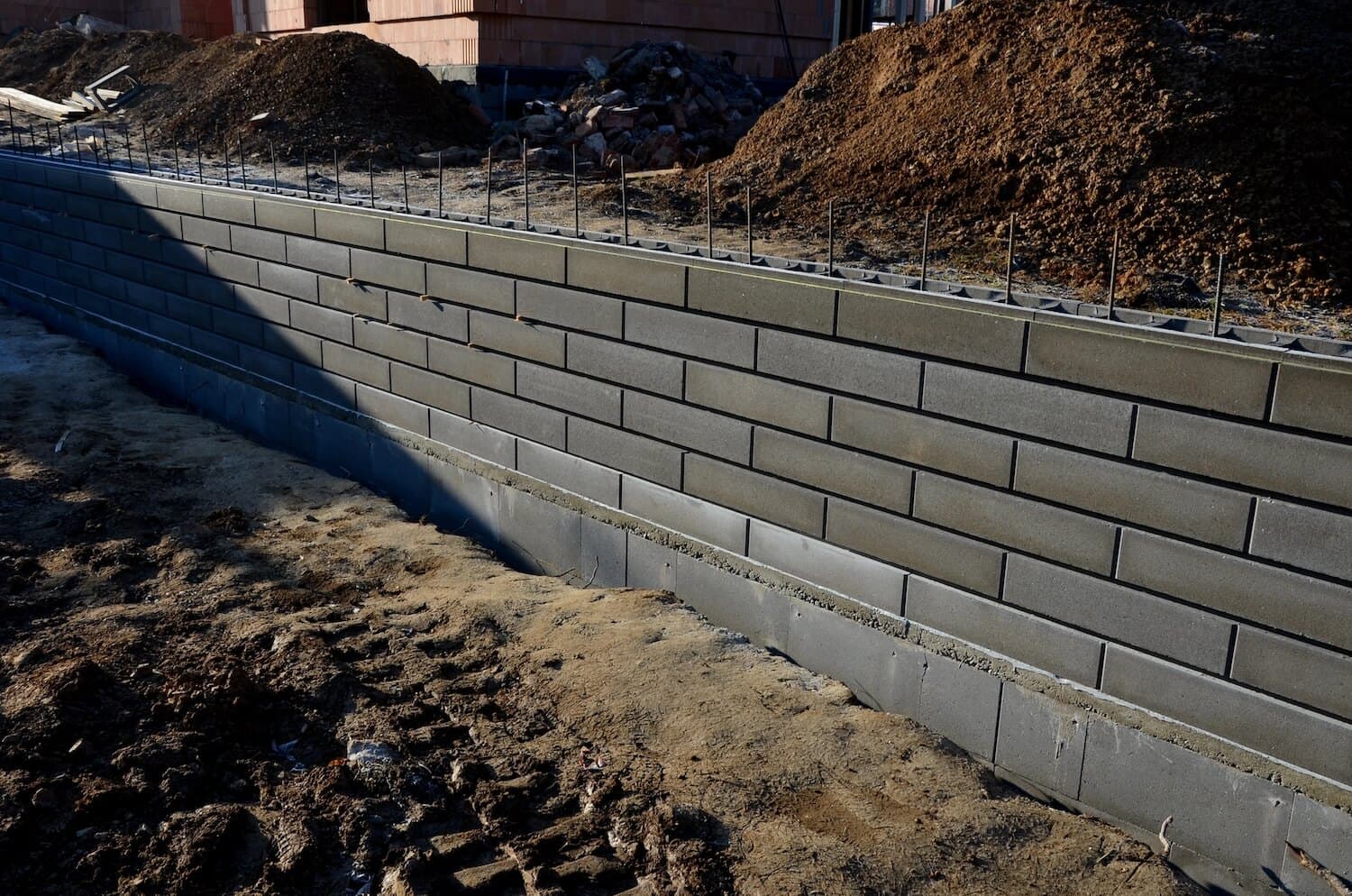
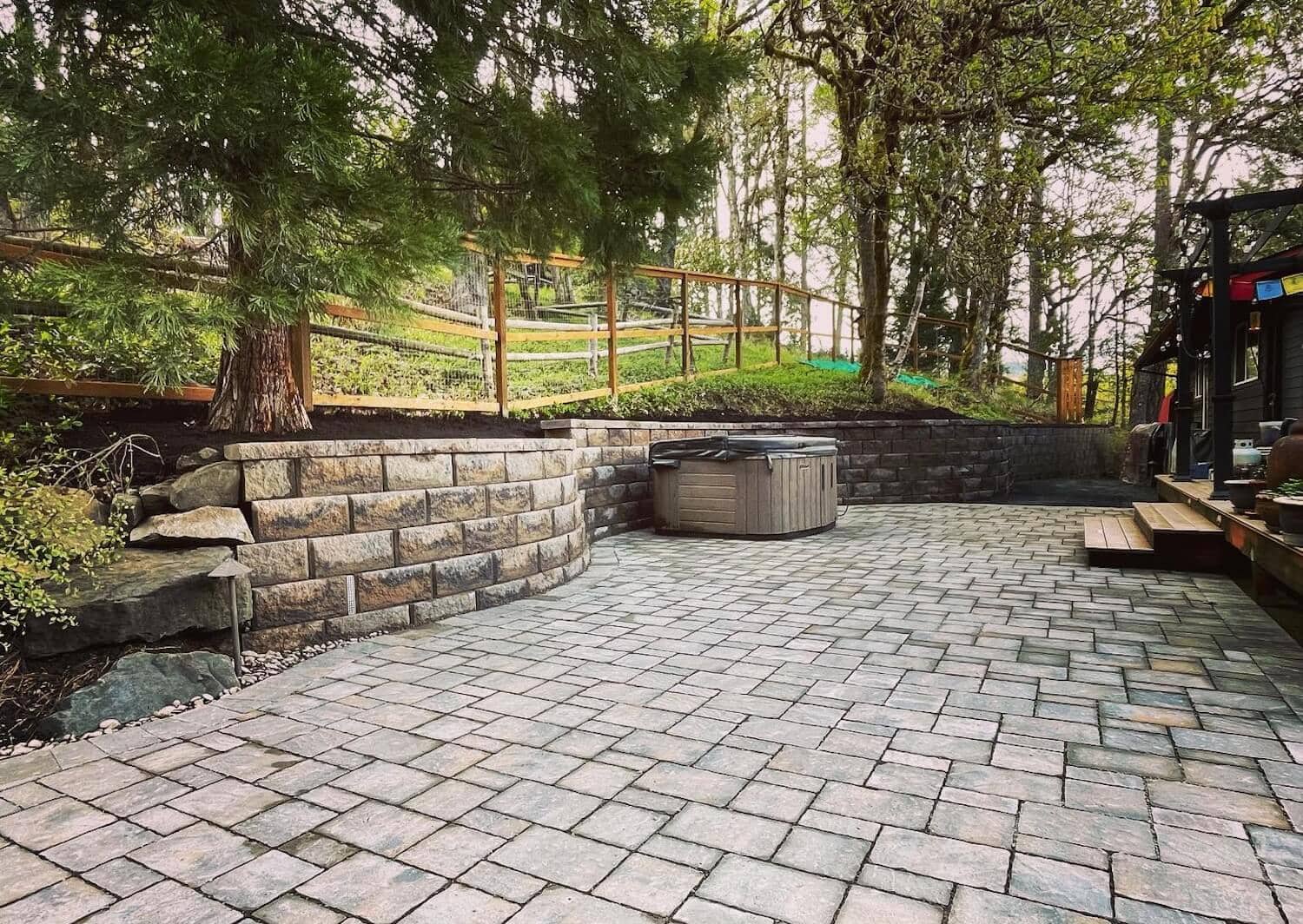
Modular, interlocking concrete blocks make up SRWs, which are popular in commercial landscaping because of their versatility, durability, and aesthetic appeal. They don’t usually require mortar and can accommodate curves, steps, and other design elements. SRWs are common around parking lots, terraces, and landscaped slopes.
Regulatory and Engineering Considerations
Commercial retaining walls must adhere to more rigorous building codes and engineering standards than residential walls. Here are a few critical considerations:
1. Property Permitting Requirements
Most municipalities require permits for retaining walls above a certain height (commonly 3–4 feet). Commercial developments often involve walls much taller than that, requiring stamped engineering plans, drainage analysis, and possibly geotechnical studies.
2. Soil and Load Analysis
The engineering of a retaining wall must consider the type of soil, slope angle, water table level, and anticipated load—especially if the wall will support structures, parking lots, or heavy equipment.
3. Drainage Systems
Poor drainage is the number one cause of retaining wall failure. Most commercial walls incorporate detailed drainage plans, including perforated piping, gravel backfill, geotextile fabric, and weep holes.
4. Accessibility and Safety Codes
For public-facing properties, retaining walls may need integrated guardrails, stair access, or fencing. Safety features must comply with ADA requirements and local building codes to avoid liability risks.
Designing with Purpose: Retaining Walls as Landscape Features
Retaining walls don’t have to be purely functional—they can also enhance your commercial landscape design. With the right materials and layout, these walls can:
- Define walkways and gathering spaces
- Create terraced outdoor seating or dining areas
- Frame signage, entryways, and water features
- Provide planters for green landscaping or drought-tolerant gardens
Aesthetic enhancements—like lighting, veneer finishes, decorative caps, and curved designs—help integrate retaining walls into the overall architectural vision of the property.
When to Call in the Professionals
Building a commercial retaining wall isn’t just about stacking blocks—it’s a complex, high-stakes undertaking that requires structural insight, geotechnical expertise, and precision execution. Unlike residential landscaping, commercial sites involve larger forces, stricter codes, and higher liabilities. One miscalculation can lead to catastrophic failure—damaged infrastructure, safety hazards, and lawsuits that can cripple your business.
That’s why smart property owners and developers turn to professionals from the very beginning.
Experienced commercial retaining wall contractors do far more than just build—they engineer solutions. They begin with a thorough site evaluation, analyzing soil composition, slope stability, water flow, and load-bearing needs. This data informs custom-engineered plans that meet local building codes and safety regulations—something that can’t be guessed or “eyeballed.”
Professional teams also understand the legal and logistical requirements of large-scale construction, from securing permits to managing inspections and ensuring ADA compliance. They’ll coordinate drainage design, choose appropriate wall materials, and integrate aesthetic elements that enhance your property's visual impact—all while keeping the project on time and on budget.
Why risk thousands—if not millions—in property value and liability to cut corners?
Hiring professionals means:
- Peace of mind knowing your wall won’t shift, bulge, or collapse over time.
- Compliance with codes and regulations to avoid fines, delays, or rebuilds.
- A polished, professional appearance that boosts curb appeal and tenant confidence.
- Long-term durability and warranty protection, backed by skilled craftsmanship and engineering.
In short: if your retaining wall is more than just decorative—or higher than a few feet—it’s not just a construction project. It’s a structural system that supports the future of your property. And that’s not something you leave to guesswork.
Call in the pros. Your property’s stability—and value—depends on it.
Real-World Applications: Where Retaining Walls Make a Difference
Office Parks
Level outdoor areas for parking, walking paths, and employee break spaces are made possible through the strategic use of retaining walls. They also help define safe walkways and improve stormwater management.
Retail Centers
Shopping centers built on sloped land benefit from terraced layouts, retaining walls that support signage and landscaping, and walls that direct pedestrian traffic while enhancing the property’s curb appeal.
Apartment Complexes
Multi-tiered apartment communities often use retaining walls to separate parking areas from units, stabilize hillsides, and enhance resident outdoor areas with seating, gardens, and stairways.
Hotels and Resorts
From dramatic entryways to pool terraces and hillside views, retaining walls help carve elegance into natural landscapes, all while preventing costly erosion around high-traffic amenities.
Industrial Facilities
In logistics centers, warehouses, and factories, retaining walls are used to reinforce loading zones, manage drainage, and ensure ground stability for heavy equipment.
The Bottom Line: Elevate Your Property with Confidence
In the world of commercial development, every square foot of usable, stable land matters. Retaining walls not only enable you to make the most of your property—they also safeguard your investment, increase resale value, and elevate the visual and functional appeal of your site.
With the right engineering, professional installation, and creative design, retaining walls are more than a necessity—they're a strategic upgrade that pays dividends in safety, efficiency, and property value. Whether you're planning a new development or looking to reinforce an existing property, consider retaining walls as an essential part of your commercial improvement plan.
Because when it comes to land—and your investment—there’s nowhere to go but up.